Casino Scenes on Screen: How Lighting, Sound, and Editing Build Atmosphere
Learn how casino scenes on screen use light, sound, and editing to create suspense, so you can enjoy the drama without mistaking it for a guide to play.
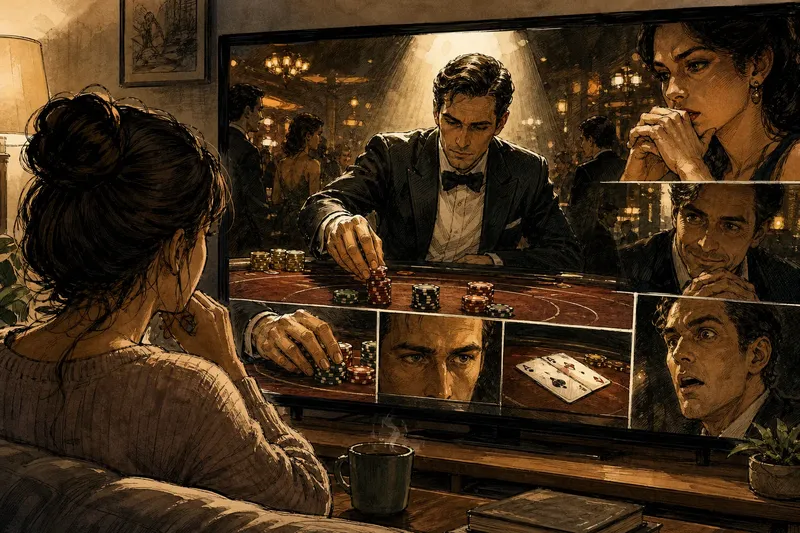
The most common mistake when watching casino scenes on screen is treating a close-up, a swell of music, or a sudden cut as useful information about how to play. That confusion can make a scripted moment feel like a lesson, even though its real purpose is to steer your attention. A better viewing lens is to ask what the scene wants you to feel and which filmmaking choices produce that feeling.
Consider an invented situation: Maya, a viewer watching a fictional casino drama at home, sees a character approach a card table, place a wager, and wait for the result. The scene can make those actions feel effortless and fateful. Maya can follow the mood without treating the sequence as a model for real gambling. The distinction comes into focus by watching the lighting, sound, editing, and the reactions around the table.
Start with what the scene makes you notice
Before interpreting the character’s choices, watch where the image directs your eyes. A film may isolate a hand, a stack of chips, a dealer’s face, or the character’s gaze. That selection leaves out much of the room. The camera is not a neutral observer; it gives some details importance and pushes others beyond the frame.
In Maya’s fictional scene, the camera leaves the surrounding tables soft and blurry while keeping the character’s fingers sharp. That choice makes a small gesture feel decisive. It does not show that the gesture affects the game’s outcome. It shows that the director wants viewers to watch the hand.
Notice what is absent, too. A cut may skip the time between decisions, and a close-up may hide the table’s full layout. The scene can compress a long stretch into a handful of dramatic beats. Treat that compression as storytelling rather than a record of how a real session unfolds.
Read the lighting as a mood choice
Casino scenes often use bright points of light against darker surroundings, or warm tones that make a room feel enclosed and charged. The lighting may pick out a face as the character waits, then let the background recede. This contrast can make the room seem intimate even when the story implies a busy venue.
Ask what the light emphasizes: glamour, pressure, secrecy, or isolation. A reflective surface can add sparkle to a shot, while shadow can make a character seem cut off from everyone nearby. Neither effect tells you whether the setting is typical or what a visitor should expect at an actual casino.
For Maya, a pool of light on the table turns the character’s pause into the scene’s center of gravity. The practical lesson is simple: the lighting is shaping your attention. Like a spotlight on a stage, it tells you where to look, not what is safe or sensible to do.
Separate casino sound from dramatic sound
Listen for layers. A scene might mix room chatter, footsteps, table sounds, and music. Some sounds may be recorded or designed to suggest a casino; others are added or emphasized in editing. A rising musical note can signal that a result matters to the story, even if no unusual event is happening in the room.
In Maya’s invented viewing situation, the music grows louder as the character waits. The card or table sounds become crisp, while conversation fades. That mix narrows the scene to one person’s anticipation. It does not establish that real venues fall silent at a decisive moment, or that a particular sound predicts what will happen.
Try a quick listening exercise: identify one sound that seems to belong to the setting and one that seems to guide your emotion. Then notice which sound the mix turns up. This keeps atmosphere and information in separate mental boxes.
Watch how editing manufactures suspense
Editing controls the order and duration of what viewers see. A director may cut from a character’s eyes to a hand, then to another player’s reaction, and finally to the result. Each cut offers a new cue, encouraging you to search for meaning in expressions and gestures.
A pause can feel longer when the film holds on a face. A rapid sequence of cuts can make a decision feel impulsive or urgent. The actual action may be brief, but the edit builds a dramatic waiting period around it. In a scripted story, that timing serves character and plot.
When Maya sees the character glance across the table before acting, the edit links the glance to the decision. The connection may be meaningful within the story, but it is not evidence that the glance is a reliable signal in real play. Editing can make one moment appear to explain another simply by placing them together.
Track reactions without treating them as clues
Casino scenes often give other characters a role as a kind of audience inside the story. A companion leans forward, a rival watches closely, or a dealer’s expression is held on screen. These reactions tell viewers how much emotional weight the scene assigns to the moment.
They can also invite a tempting inference: that a person’s face reveals what will happen next. For a viewer, the safer reading is narrower. A reaction is evidence of how the character is being portrayed, not a dependable forecast of an outcome.
Maya notices that the rival’s smile appears just before the result. Because the scene places those moments close together, the smile feels like a clue. But the story may be using it to create suspicion, foreshadow a conflict, or misdirect the audience. The sequence explains the drama, not a method for reading people at a table.
Follow the invented scene from start to result
Return to Maya’s fictional casino drama. The character arrives at a card table, and a wide shot briefly establishes the room. The camera then narrows to the character’s hands. Warm light catches the chips; the background falls into shadow. A low musical pulse begins, and the room’s chatter slips behind it.
The character makes a choice. The scene cuts to a companion’s tense face, then back to the table. A pause stretches. The rival smiles, the music rises, and the result appears in a sharp close-up. The character reacts with surprise. The scene ends before viewers see the wider pattern of play or the ordinary moments surrounding the dramatic one.
Nothing in this sequence needs to be a practical lesson. Its structure is built to make one outcome feel personal and consequential. Maya can describe the craft: selective framing, expressive light, a layered soundtrack, reaction shots, and a delayed reveal. That account captures what the scene does without translating its fictional choices into advice.
The result also shows why a memorable win or loss can distort a viewer’s sense of a game. A story naturally centers events that matter to its characters. Routine turns, uneventful waits, and consequences outside the scene may receive little or no screen time. The omission is a storytelling choice, not proof that those parts do not matter in real life.
Ask what the scene leaves outside the frame
A casino scene is selective by design. It may leave out the rules that govern the game, the decisions that came before the featured moment, or the practical limits a real person would consider. It can also present a character’s confidence as persuasive because the script needs viewers to stay with that character.
For Maya, the most useful question after the result is not, “What should I copy?” It is, “What did the film omit to make this moment feel complete?” She notices that the scene ends with a reaction rather than a fuller account of the session. That ending gives emotional closure while leaving practical questions unanswered.
This distinction matters whether the scene is glamorous, comic, tense, or bleak. A portrayal can make a casino feel like a place of instant transformation or constant threat. Viewers can respond to those ideas while remembering that a designed scene is not a balanced description of every real setting or experience.
What should I notice in a casino scene?
How can I tell whether the music is part of the setting?
Listen for a change in volume or intensity when the camera focuses on a decision. Music that swells with the character’s emotions is often directing your response rather than documenting the room.
Does a close-up show how a game really works?
A close-up shows only the details the filmmakers chose to include. It may clarify a dramatic gesture while leaving out rules, context, or earlier events.
Can a character’s expression predict an outcome?
On screen, expressions are performances shaped by casting, direction, and editing. Treat them as clues to the story’s characterization, not as reliable signals about a game.
Why does a short scene make the wait feel so long?
The edit can hold on a face, delay a reveal, and use music to stretch anticipation. That dramatic timing is created for the audience; it does not describe the pace of every real session.
Keep the drama and the decision separate
When a casino scene stays with you, name the craft before you remember the character’s choice. You might say that the director used a tight frame, softened room noise, and delayed the result. That description is more precise than treating a dramatic move as a usable strategy.
Use the same viewing lens on a glamorous montage or a quiet television scene: ask what the camera selects, what the soundtrack changes, how the cuts arrange cause and effect, and whose reactions the story privileges. Casino scenes on screen can then be enjoyed as constructed drama, while real gambling decisions remain separate from the cues a film uses to hold your attention.